


Stop the Warp: Dealing with Spring-back in Car Interiors
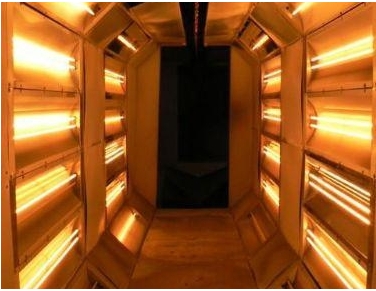
Ever pull a part out of a thermoforming mold only to watch it slowly twist or pull away from the specs? It’s frustrating. That “spring-back” usually happens because the material is still holding onto internal stress, or it cooled down in a way that left it feeling uneven. We’ve found the best way to kill that problem is with high-intensity infrared (IR) heaters, but the secret isn’t just “more heat.” It’s aboutzonal control.
Why “Even Heating” is a Lie
Most people think you want the whole part heated the same way. But think about a complex interior piece. You’ve got thin edges in one spot and thick, chunky ribs in another. If you blast the whole thing with one temperature, the thin parts will overheat and degrade while the thick parts stay too cold to move. That temperature gap is exactly what causes the part to warp. It’s basically the material fighting itself. So, we split the heating array into independent banks. This lets you put the heat exactly where it’s needed. You can crank it up for the thick sections and dial it back for the edges. When the material flows exactly how it’s supposed to, it stops fighting the mold.
Getting Rid of the Stress
To stop a part from warping, you have to let the material relax. Short-wave IR is great because it doesn’t just sit on the surface; it dives deep into the polymer. It heats the material from the inside out, which lets those molecular chains loosen up before the part even hits the mold. When you get your zones right, the part enters the mold at a consistent temperature across the whole footprint. No weird shrinkage. No pulling. Just a part that actually stays where it’s supposed to.
The Trade-offs (The Honest Part)
Now, this isn’t a “plug and play” miracle. Zonal heating makes your wiring a bit more of a headache. You’ll need more thermocouples and a smarter PID loop to make sure the zones don’t bleed into each other. If you make your zones too tight, you might end up with “hot spots” right at the boundaries. To fix that, we usually overlap the heater footprints just a little. It smooths out the transition and keeps everything feeling fluid.