


Stop the Cracks: A Better Way to Cure Brake Pads
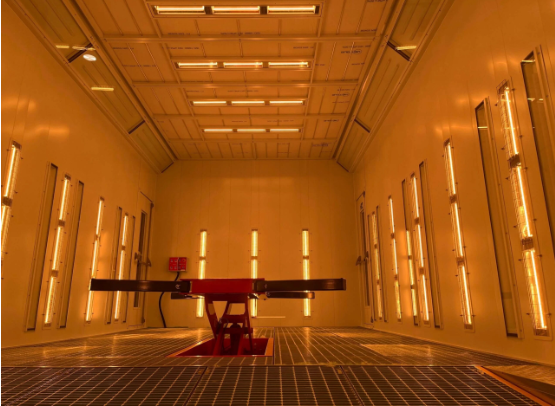
Curing brake pads in a continuous oven is a bit of a tightrope walk. If you crank the heat too quickly, the resins basically freak out. They volatilize violently, building up gas pressure inside the pad that eventually bursts through the surface. That’s how you end up with porosity and those annoying surface cracks. We found a way around this using precision infrared (IR) heating. It’s all about controlling how deep that heat actually goes. The problem with standard ovens Most convection ovens just blast the surface. This creates a huge temperature gap between the “skin” of the pad and the core. That gap is exactly what triggers the cracking. Instead, we use short-wave IR emitters. These drive the heat deeper into the friction material. By tuning the wavelength, we make sure the core hits the curing temp at a pace that lets the gases leak out naturally, rather than rupturing the whole structure. Don’t just set it and forget it You can’t just pick one temperature for the whole tunnel and hope for the best. It doesn’t work. We split the oven into zones. The first part is just a pre-heat to get the material stable. Then, the second zone hits the actual peak curing temp. Finally, there’s a controlled cooldown. It’s a staged approach. No thermal shock, no structural failure. Simple. The gear you actually need To make this work, you need high-density IR lamps and PID controllers that can react fast. High-wattage emitters are great because they keep the line moving, but they generate a ton of localized heat. This is where people usually mess up: the cooling. If your fans and exhaust systems aren’t spec’d correctly, the oven housing will overheat. Once that happens, your sensors drift and you’ve just ruined an entire batch. One last tip? Angle your IR lamps so they overlap. It kills those cold spots on the conveyor. When the heat is totally uniform, the resin cross-links evenly across the whole part, and you get a much stronger pad.